
Day in the Life: Bohdan Tokarskyi, Frontend Lead Developer

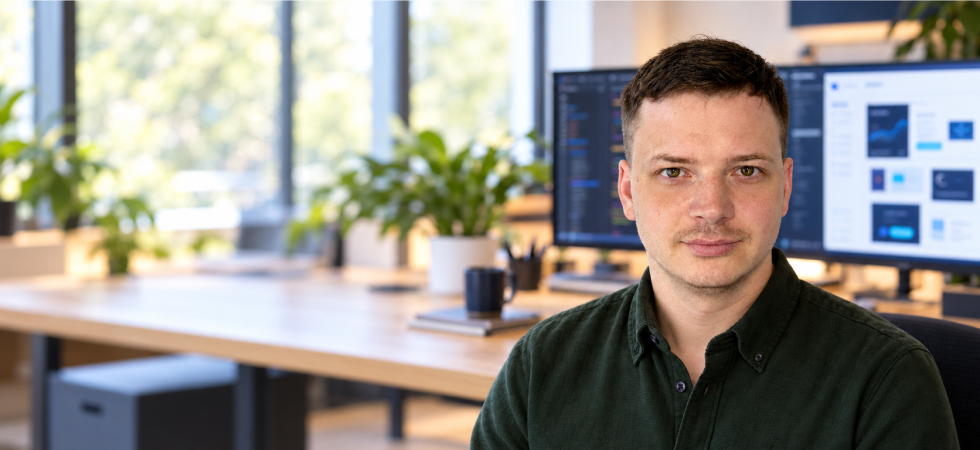
Bohdan Tokarskyi leads DeepAlert’s frontend team, working across both our Management GUI and DeepAlert COMMAND, the platform he built from the ground up. His route into software wasn’t a straight line: he started out in construction engineering before finding that frontend development suited his eye for detail.
Since stepping into a leadership role, his days look different from when he joined. We asked him where his time actually goes, what designing for control room operators demands, and what he does when he’s not building things.
Walk me through yesterday — actual start to finish. Where did the time go versus where you expected it to go?
I started the day planning to refactor the camera main drawer, basically cleaning up a legacy module. But what actually happened was that most of the day went to reviewing my teammates’ pull requests and attending meetings.
How much of your week is writing code versus everything else, now that you’re leading the team?
Originally, I thought leading the team wouldn’t change how much time I spent coding, but now it’s basically 50/50. About half of my time goes into writing code, and the other half goes into reviews, keeping an eye on the frontend team’s goals, and guiding higher-level changes across our repositories.
You’re working across two platforms, the Management GUI and COMMAND. What does that actually feel like day to day?
It’s an interesting balance, but what excites me most is the work we’re doing with COMMAND. I built it from scratch, so it’s something I’m particularly proud of. We’ve designed it with a modern, modular codebase that makes it easier to develop new features and build on what we’ve already created. My day involves working across both platforms, but COMMAND is where I get to focus on new possibilities, solve interesting technical challenges, and help shape what comes next for DeepAlert.
An operator is six hours into a shift and something lands in the queue. What does good design have to do in that moment?
In our context, the interface has to do more than just look clean. It has to carry some of the cognitive load. Six hours into a shift, people are tired, so the UI needs to surface what’s important, cut through the noise, and make the next step obvious. That helps operators stay focused on the information they need to make a decision and process alerts efficiently.
What’s something you changed in the interface that seemed small but made a real difference to how operators worked?
One feature that seems relatively small but makes a real difference is Key Account Holders in COMMAND. It gives operators immediate access to the right contacts for each site, including phone numbers, relevant information and responsibilities. Having everything in one place means operators spend less time searching for details and more time responding to alerts. It’s a simple addition, but it’s a good example of how we’re designing COMMAND around what operators actually need day to day.
COMMAND was built from the ground up. What opportunities did that give you from a development perspective?
Building COMMAND from scratch gave us the opportunity to design a platform around the way we want to work today and where we want to take the product next. We focused on creating a clean, modular and flexible foundation that follows modern engineering and UI/UX practices. It means we can develop new features, introduce additional modules and respond to customer needs more efficiently. For me, the exciting part is knowing we’ve built something that can continue to grow and evolve alongside DeepAlert.
You’re responsible for code quality across the frontend. What’s the thing you push back on most often in review?
I often push for modularity, clear separation of concerns, and thinking beyond the immediate task. When we build or refactor something, I want us to consider how easily it can be extended for future needs. Keeping responsibilities in the right places makes the codebase much easier to maintain and evolve.
What changed for you when you went from writing code to being responsible for other people writing it?
I spend much more time thinking about how tasks are defined and reviewing code. In a way, I still mentally implement the feature myself because I need to understand the context and the decisions being made, but I’m not the person writing every line anymore. The biggest shift is learning to trust your teammates, frame the problem clearly, and guide them through the challenge rather than just grabbing the keyboard and doing it yourself.
How did you end up in frontend specifically — deliberate, or accidental and how did you land up at DeepAlert?
I came into software from a completely different field — I was in construction engineering. At first, I tried getting into backend development, but it didn’t really click for me. Frontend felt more approachable as a way into programming, and I quickly realised I had an eye for pixel-perfect details and enjoyed improving things from a UI and UX perspective. Over time, I grew into full-stack development, but starting with frontend really shaped the way I think about building software.
I had worked with Angus Comrie, our CTO, before at another startup, and we worked together for a couple of years. Later, when he joined DeepAlert, he reached out to me, and that’s how I ended up joining the team.
What do you do when you’re not building things?
Outside of work, I spend a lot of time with my family. I play basketball and tennis, and sometimes play video games, watch movies, or listen to music. I used to play guitar as well. We also enjoy travelling when we get the chance, even if it’s just a quick trip out of town to a lake or a river.
Related Articles