
Alert Fatigue: The Hidden Cost Driver in Control Rooms

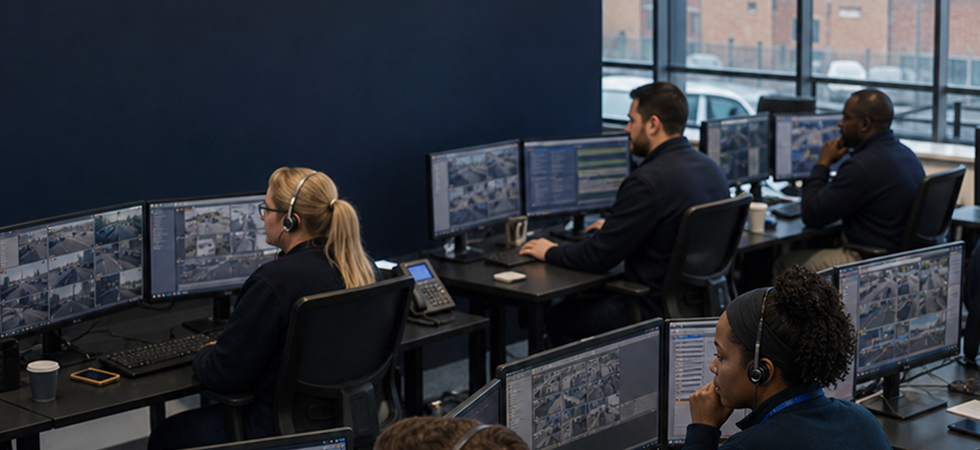
When alarm receiving center or control room managers look at rising operating costs, the obvious drivers are usually headcount, technology spend and growth in the number of monitored sites.
Alert fatigue is less often considered.
What is alert fatigue, though? It is the gradual decline in attention and decision quality which is caused by repeated exposure to low-value alerts.
Yet alert fatigue has a real impact on the cost of running your business.
It doesn’t appear on your balance sheet as a separate line item. Instead, the cost is reflected in higher staffing requirements, overtime, operator turnover, lower productivity and reduced margins.
Why Alert Volume Keeps Increasing
Alert volume tends to grow as monitoring environments become larger and more complex.
Common causes include:
- Cameras generating events for movement that has little operational relevance
- Poorly configured detection zones and schedules
- The same analytics being applied across sites with very different requirements
- Multiple monitoring platforms creating additional workflow overhead
- Camera estates growing faster than the teams responsible for monitoring them
The last point is particularly important from a commercial perspective.
When camera numbers increase without a corresponding improvement in alert quality, operator workload increases with them. If more cameras consistently require more people to monitor them, the operation becomes increasingly dependent on headcount to support growth.
Where the Cost Shows Up
Higher staffing costs
The most common response to increasing alert volume is to add operators.
That may solve an immediate capacity problem, but it does not address the reason the workload increased in the first place.
If a meaningful proportion of an operator’s time is spent reviewing alerts that require no action, additional headcount is being used to compensate for low-quality event generation.
Operator turnover
Reviewing large volumes of repetitive, low-value alerts is demanding work.
Over time, this contributes to fatigue, disengagement and higher staff turnover.
Turnover creates additional costs through recruitment, onboarding and training, while experienced operators also take valuable site and client knowledge with them when they leave.
Reduced margins
Monitoring profitability depends in part on how efficiently operator capacity is used.
If staffing needs increase at roughly the same rate as the number of monitored cameras, the cost per camera remains high.
For monitoring providers operating in competitive markets, this places pressure on margins and limits the ability to grow profitably.
Service quality
High alert volumes affect service performance.
When operators are required to review large numbers of irrelevant events, there is a greater risk that important events are handled more slowly or inconsistently.
Over time, this affects client confidence and retention.
The cost of an alert is not limited to the time it takes an operator to review it. The broader cost lies in staffing and operational capacity required to process large volumes of events.
Why the Usual Responses Do Not Solve the Problem
Control rooms typically respond to increasing alert volumes in one of three ways:
- Hire more operators. This increases capacity, but also increases recurring payroll costs.
- Add more software or dashboards. This may provide additional functionality, but can also add licensing, integration and workflow complexity.
- Reduce detection sensitivity. This may lower alert volumes, but increases the risk of genuine events being missed.
These approaches manage the symptoms of high alert volume rather than addressing the underlying issue.
The more effective approach is to improve the quality of the events that reach an operator.
Reducing the Load Before It Reaches the Operator
A more scalable monitoring model reduces unnecessary operator workload upstream.
This can be achieved through better detection configuration, filtering, and verification before an alert reaches the control room.
AI-supported monitoring plays an important role here.
Its value is not simply in generating alerts more quickly or adding another interface to the monitoring environment. The commercial value comes from reducing the number of low-value events that require human review.
When this is done effectively, the same team can support a larger monitored estate without requiring a proportional increase in headcount.
It also helps operators spend more of their time on events that genuinely require investigation or action.
What This Means for the Cost Base
Reducing irrelevant alerts can affect several parts of the monitoring operation:
- More cameras can be monitored per operator
- Staffing requirements can grow more slowly than the camera estate
- Operators spend less time reviewing low-value events
- Turnover-related recruitment and training costs may be reduced
- Cost per monitored camera can improve
- Service consistency can improve as operator attention is focused on relevant events
- Monitoring providers have greater flexibility on pricing and margins
The impact is therefore broader than alert reduction alone.
It changes how efficiently the operation can scale.
Questions to Ask About Your Monitoring Costs
For control room and commercial managers, several questions help identify whether alert volume is contributing unnecessarily to the cost base:
- How many alerts reach operators but require no action?
- How much operator time is spent reviewing low-value events?
- How many cameras can each operator effectively monitor?
- What is our cost per monitored camera?
- How has that cost changed as the camera estate has grown?
- What is operator turnover costing us each year?
- Can we add cameras or sites without adding staff at the same rate?
- What proportion of alerts could be filtered or verified before reaching an operator?
- Are we measuring cost per actionable event, or only cost per operator hour?
These measures provide a clearer view of whether growth is being supported by operational efficiency or simply by additional headcount.
The Business Case
Reducing alert fatigue is not only an operator productivity issue.
It has a direct impact on the economics of a monitoring operation.
Improving alert quality helps reduce the staffing required to support a given number of cameras, lower unnecessary workload, improve operator focus and reduce the cost of monitoring each camera.
Conclusion
Alert fatigue is often discussed as an operational challenge, but its financial impact is significant.
When low-value alerts consume operator capacity, the cost is reflected across staffing, turnover, service performance and margins.
Control rooms that reduce unnecessary alert volume can support larger camera estates more efficiently and make better use of the operators they already have.
For monitoring providers looking to scale, improving alert quality is therefore not just a technical improvement. It is an important part of controlling the cost of growth.
Related Articles