
Fewer Steps to Dispatch: verified alerts through DeepAlert Core

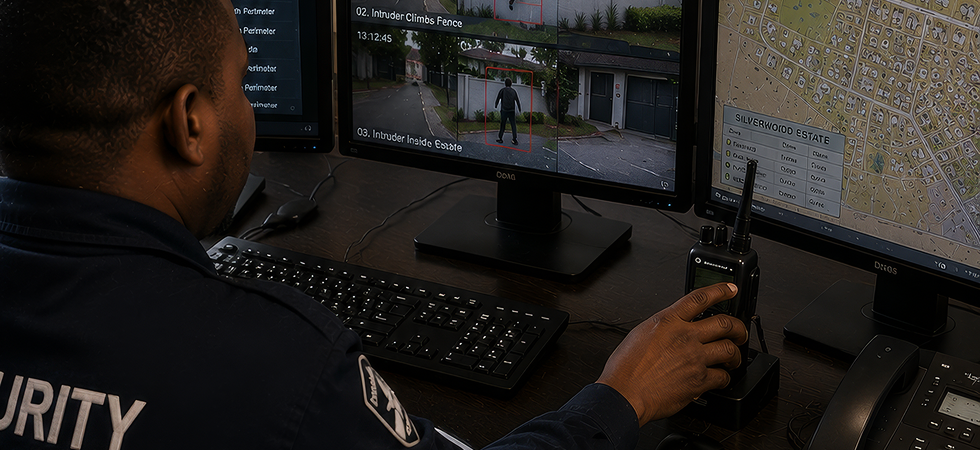
Ask an operator to explain what happens between a camera event and a dispatch decision, and the workflow often includes more steps than expected.
An alert triggers. The operator opens it, checks the footage, confirms the site details, switches to another platform, records the event and then decides whether to escalate, dispatch or close it.
Each additional step consumes time and operator attention. The problem is not the operator. It is a workflow that asks people to move information between systems before they can make a decision.
The manual work behind every alert
Individual tasks may only take a few seconds, but across hundreds or thousands of events, they add up.
- Re-keying — operators copy or enter the same event information into a CAD, dispatch or alarm-management platform because the camera event originated somewhere else.
- Screen switching — operators move between the VMS, alarm platform and other systems to find footage, site information or response procedures.
- Manual verification — operators investigate raw motion events to establish whether they contain a person, vehicle or anything that requires action.
These steps rarely appear as separate items on an operational report. Instead, they contribute to longer handling times, higher workload and unnecessary pressure on operators.
Same platform. Fewer steps.
DeepAlert Core changes the workflow by filtering camera events before they reach the operator and delivering verified events into the ARC platform the operator already uses.
- The camera generates an event.
Your existing camera estate continues to operate as configured. - DeepAlert Core analyses the event.
DeepAlert applies AI video analytics to determine whether the event contains relevant activity, such as a person or vehicle. It filters nuisance triggers such as vegetation, changing light and other irrelevant movement before they enter the operator queue. - The verified event reaches your existing video management platform.
The operator does not need to monitor another DeepAlert interface alongside the existing monitoring system. DeepAlert delivers the verified event into the platform that already supports the operator workflow. - The operator makes the decision.
The operator reviews the event and follows the appropriate response procedure — whether that means escalation, dispatch or closure.
The technology removes unnecessary handling between the camera event and the operator. It does not remove the operator from the process.
Reduce administration, not human judgement
DeepAlert Core filters and delivers events. It does not make dispatch decisions.
Operators remain responsible for reviewing credible events, applying site procedures and deciding what happens next. DeepAlert simply removes much of the unnecessary work that takes place before they reach that point.
That distinction matters.
DeepAlert Core does not require an ARC to replace its monitoring platform, and it does not aim to replace its operators. Instead, it adds an AI verification layer to the existing workflow, helping the control room process camera events more efficiently.
Look at the steps in your own workflow
Consider the journey from camera event to dispatch decision in your monitoring centre.
How many steps involve genuine judgement?
And how many simply exist because information needs to move from one system to another?
Those additional steps may only take seconds individually. At control-room scale, however, they can have a significant effect on operator capacity, response times and ultimately the cost of handling each actionable alert.
Related Articles