
Using Video Analytics to Spot PPE Compliance Gaps

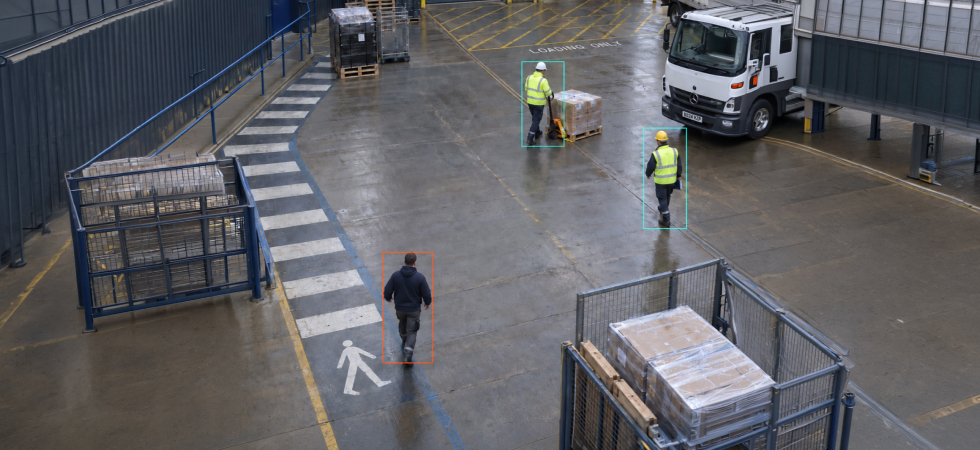
On most industrial sites, the security manager and the safety manager are looking at the same yard through entirely separate systems.
The cameras were installed primarily for security and intrusion monitoring. PPE policy is managed through supervisors, spot checks, audits and toolbox talks.
That separation made sense when cameras could only record. It makes less sense when the same camera estate can support both security and operational use cases.
HSE’s provisional figures for 2025/26 recorded 126 workers killed in work-related incidents in Great Britain. While fatality rates have fallen significantly over the long term, that improvement has slowed in recent years, with construction and agriculture, forestry and fishing continuing to record some of the highest numbers of worker fatalities.
The regulatory requirements around PPE are already well established.
The harder problem is identifying where compliance breaks down between the checks already in place.
What happens between the walk-rounds
Under the PPE at Work Regulations 1992, amended in 2022 to extend duties to limb (b) workers, employers have clear responsibilities around providing and using appropriate PPE.
On site, compliance is typically checked through supervisor walk-rounds, audits and inspections. Those checks matter, but they can only show what was happening at the time.
The existing camera estate can help fill some of the gaps between those checks.
Used appropriately, video analytics can help identify PPE exceptions between manual inspections, drawing attention to the places and times where policy may not be translating consistently into practice.
That matters because footage is most valuable before an incident, not only afterwards when it has become evidence.
A second return on infrastructure that’s already paid for
For organisations already using DeepAlert, a PPE use case can make use of the same camera estate that supports security monitoring.
In many cases, that means extending the value of existing surveillance infrastructure without replacing the camera estate or deploying a separate safety-camera network.
Security may have justified the cameras in the first place. Safety can create another operational return from the same asset.
For a multi-site operator, that creates an opportunity to use shared infrastructure across security and Health & Safety requirements.
For an installer or integrator, it opens a new conversation with an existing customer rather than requiring an entirely new surveillance project.
The important qualification is that not every camera will automatically be suitable.
Field of view, image quality, camera positioning and the way the site is connected all affect whether a particular safety use case is feasible on a specific camera.
What this looks like, and where it stops
The PPE detection capability in CorePlus is designed to identify PPE conditions such as the presence or absence of hard hats and hi-vis vests.
A rule might, for example, be configured to:
Alert if a person without a hi-vis vest enters the loading area during operating hours.
That distinction matters because PPE requirements are rarely identical across an entire site.
A loading area may need one rule, while a pedestrian route, workshop or restricted work zone may require another.
CorePlus builds on Core’s false-alarm filtering and adds more specialised models and contextual capabilities for specific operational use cases.
The objective is not to turn every camera into a general-purpose workforce monitoring tool.
It is to apply analytics selectively where there is a defined operational requirement and where the camera view is suitable for the task.
Watching your own workforce is a different conversation
Using cameras to detect an intruder and using them to observe your own workforce are not the same thing from a privacy or data-protection perspective.
Workplace monitoring brings additional privacy and data-protection considerations. Organisations need to consider lawful basis, necessity, proportionality and transparency, and assess whether a data protection impact assessment is required for the proposed deployment.
That governance needs to be part of the deployment, not an afterthought.
There is also an important operational question: what do you do with the information once you have it?
A more useful approach is exception-led and focused on improvement rather than individual surveillance.
The useful output is not identifying individual workers for routine mistakes.
It is seeing that the same entrance produces repeated PPE exceptions around a particular shift change, or that compliance drops consistently in a specific work area.
That may point to a briefing problem, poor signage, an inconvenient PPE station or a process that is not working as intended.
Aggregate patterns, not individual scorecards.
That is where the information starts becoming useful to a safety manager rather than simply becoming another monitoring system.
From policy to practice
Most organisations know what their PPE policy requires.
The harder question is how consistently that policy is being followed across sites, shifts and working areas between formal checks.
Video analytics will not replace supervision, audits or inspections.
But it can provide another source of operational evidence about where PPE exceptions are occurring repeatedly — and where a closer look may be worthwhile.
For organisations already operating substantial camera estates, that creates an opportunity to get more value from infrastructure that is already in place while giving safety teams another way to understand what is happening between the walk-rounds.
Related Articles