
What Camera Health should actually be watching

Every control room has had this moment. A client asks for footage of an incident, the operator pulls the camera that covers the area and gets a spinning wheel. Or a black frame. Or a view of a wall, because someone repointed the camera during a delivery three weeks ago and nobody told anyone.
The camera itself is usually fine. It has power, it has a lens, it’s bolted where it was installed. What’s failed is something in the chain between that camera and the operator and unless someone is watching that chain, the failure announces itself at the worst possible moment: when you need the footage.
It’s rarely the camera that failed
Ask most operations managers what camera health means and you’ll get an answer about the camera: is it online, is the lens dirty, has it moved. All of that matters. But a camera is only the first component in a fairly long list of things that have to work before an operator sees anything useful.
The network path. A site drops its connection at 02:00 and comes back at 06:00. The camera recorded locally the whole time. Nothing reached you, and nothing told you it hadn’t.
Power at the edge. A switch on a UPS that quietly stopped holding charge eighteen months ago. Half the estate goes down with the mains and nobody connects the two events until the third outage.
The recorder and its storage. An NVR with a failing disk doesn’t usually stop working. It starts silently shortening retention, or drops channels, or writes files it can’t play back. Retention is one of those things everyone assumes is thirty days until the day someone asks for day twenty-six.
The signalling path to the ARC. The route between site and centre is a component like any other. If signalling stops, the site looks identical to a site where nothing is happening.
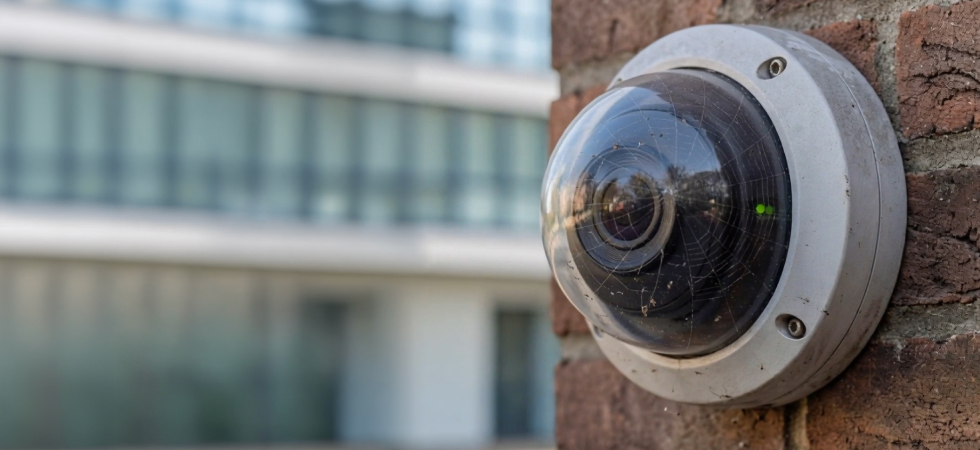
The scene itself. Not a fault in any hardware sense, but functionally the same outcome: a spiderweb across the lens, IR flare bouncing off a new roller shutter, rain on the dome, a security light that now blows out half the frame. The camera is healthy. The image is useless.
Silence looks the same either way
Because in a monitoring operation, silence is ambiguous.
A site that sends no alerts overnight and a site whose connection died at 22:00 produce exactly the same thing in the queue: nothing. There is no negative alert. Operators are trained to react to what arrives, and none of these failures arrive. The absence is invisible until someone goes looking for a specific clip, which is typically after an incident, in front of a client.
That’s the structural problem with reliability in monitoring. It isn’t that these faults are hard to detect. It’s that nothing in a normal shift is designed to notice an absence.
What Camera Health Notifications are actually for
This is the gap Camera Health Notifications are built to close. Rather than waiting for an operator or a client to discover a fault, DeepAlert checks every connected camera on an ongoing basis for whether it’s still in a state where it can do its job, and reports on AI readiness daily rather than on request.
The checks cover the conditions that most often make a camera useless while leaving it technically online: no video, camera status and off/online state, lack of clarity or lens blurring, bright lights and flaring, darkness, rain drops, and spiderwebs. Each flag comes with a reference image alongside the current unhealthy image, so whoever picks it up can see the problem rather than read a status code.
Three things follow from that, and they matter more operationally than the detection itself:
- The fault goes to whoever fixes it. A health notification with the site, camera and fault attached can route to the installer or site contact directly.
- There’s a record. A per-camera history (when it degraded, when it was flagged, when it was resolved) is the difference between “we think coverage was fine” and being able to show it.
- It feeds what the client sees. Coverage and uptime belong in the same evidence-backed reporting the client already receives. Proving what was monitored includes proving it was monitorable.
Worth being clear about scope: this watches the cameras and what they can see. Your NVR SMART status, disk retention, switch power and signalling path are still your stack’s job to monitor. But camera health is very often where an upstream failure first becomes observable — a group of cameras degrading together is rarely a lens problem.
One question worth taking to your next ops meeting
Pick a site. Not your best one, not your worst — a normal one. Then ask: if the network dropped on it tonight, or the recorder quietly stopped writing, how would you find out, and how long would it take?
Very few can answer that.
Related Articles