
Why AI Video Analytics Should Fit Into Your Existing Monitoring Workflow

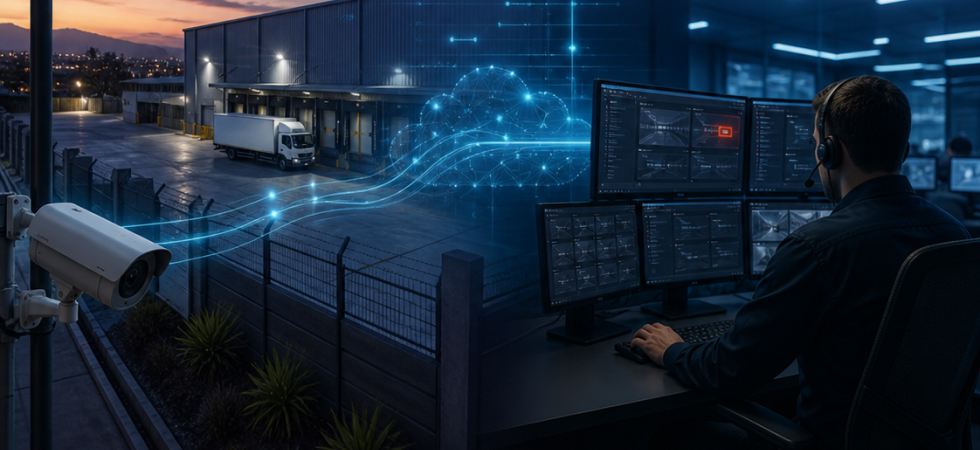
The surveillance industry spends a great deal of time talking about detection accuracy.
Can the system distinguish a person from an animal? Can it operate at night, in poor weather or at long range? How many nuisance alerts can it remove?
These are important questions. But they overlook another issue that has just as much influence on operational performance:
What happens after the AI has made its decision?
For a monitoring centre, a detection only becomes useful when it reaches the right operator, in the right system, with enough context to support a fast response. If operators need to open another application, monitor another queue or manually compare information between platforms, even accurate AI can create additional work within the monitoring workflow.
Integration shouldn’t be treated as a means to an end, it should be treated as another high achieving operator whose focus is making other operators more efficient and focused.
Better technology should not mean rebuilding the control room
Most established monitoring centres already have a platform at the centre of their operations.
Operators are trained on it. Standard operating procedures are built around it. Customer accounts, escalation paths and reporting processes may have been refined over many years.
Replacing that system simply to gain access to better video analytics can introduce more disruption than value.
The alternative is to treat AI as an intelligence layer rather than a replacement platform.
Camera events can be analysed before they enter the operator’s queue. Nuisance activity can be filtered out, while relevant events are returned to the monitoring system the operator already uses.
The technology improves the quality of the incoming alerts without requiring the control room to abandon the workflows that already work.
This is exactly where DeepAlert Core fits.
Core connects DeepAlert’s AI video analytics layer to the customer’s existing Video Management System or monitoring platform. Rather than asking operators to move to a separate interface, it allows organisations to continue working in platforms such as Immix, Patriot, Sentinel, Milestone and others while adding DeepAlert’s filtering and analytics capability behind the scenes.
Core connects DeepAlert’s AI video analytics layer to the customer’s existing Video Management System or monitoring platform.
Integration determines whether AI removes work or moves it
Poorly integrated AI does not necessarily reduce workload. Sometimes it merely moves the workload somewhere else.
An operator may receive fewer alerts in the primary monitoring platform, but now has a second dashboard to watch. A supervisor may gain useful analytics, but only after exporting and reconciling data from multiple systems. A technically accurate detection may still arrive without the site information, priority or escalation workflow required to act on it.
Each additional step introduces delay and complexity.
A well-integrated analytics layer should do the opposite. It should operate largely in the background, improving the information entering the existing system without demanding constant attention from the operator.
In practical terms, operators should not need to think about which AI platform analysed an event. They should simply receive a more relevant alert in the system they already use.
With DeepAlert Core, camera events are analysed by DeepAlert’s platform before they reach the operator. Nuisance events are filtered out, while relevant alerts are delivered back into the customer’s existing platform through the appropriate integration or configured delivery method.
The operator’s workflow stays familiar. The quality of the alert queue improves.
The operator should see the benefit, not the integration
The best integrations are often the ones operators barely notice.
They do not introduce another screen, another login or another process to remember. They improve what is already there.
For monitoring centres, this can mean fewer irrelevant alerts competing for attention, less time spent manually verifying obvious nuisance events and more focus on activity that may require intervention.
DeepAlert Core is designed around that principle. It is not intended to replace the monitoring platform. Its role is to make that platform more effective by improving the quality of the events entering it.
Core connects DeepAlert’s analytics to the platforms customers already use.
This gives monitoring centres a practical choice. They can adopt AI video analytics without being forced to replace the systems, operator workflows and processes they have already invested in.
The real test of AI is operational
Detection accuracy will always matter. But monitoring centres should also examine how an analytics product fits into the wider operation.
Does it require another interface?
Will operators need to change established procedures?
Can it return alerts to the platforms already in use?
Does it remove work from the control room, or simply move that work into another system?
The most effective AI is not necessarily the system with the most impressive standalone demonstration. It is the system that quietly improves the monitoring operation around it.
That is the purpose of DeepAlert Core: to add an intelligent filtering layer to existing monitoring infrastructure, reduce nuisance alerts and deliver relevant events into the systems operators already know.
For most control rooms, the best technology is not the technology that asks them to start again.
It is the technology that makes what they already have work better.
DeepAlert also has an API that can connect to most Video Management Systems. If you would like to reach out to find out more, feel free to contact our team.
Related Articles